What we built
Here is what was built, shown plainly, with where and when.
Finished homes
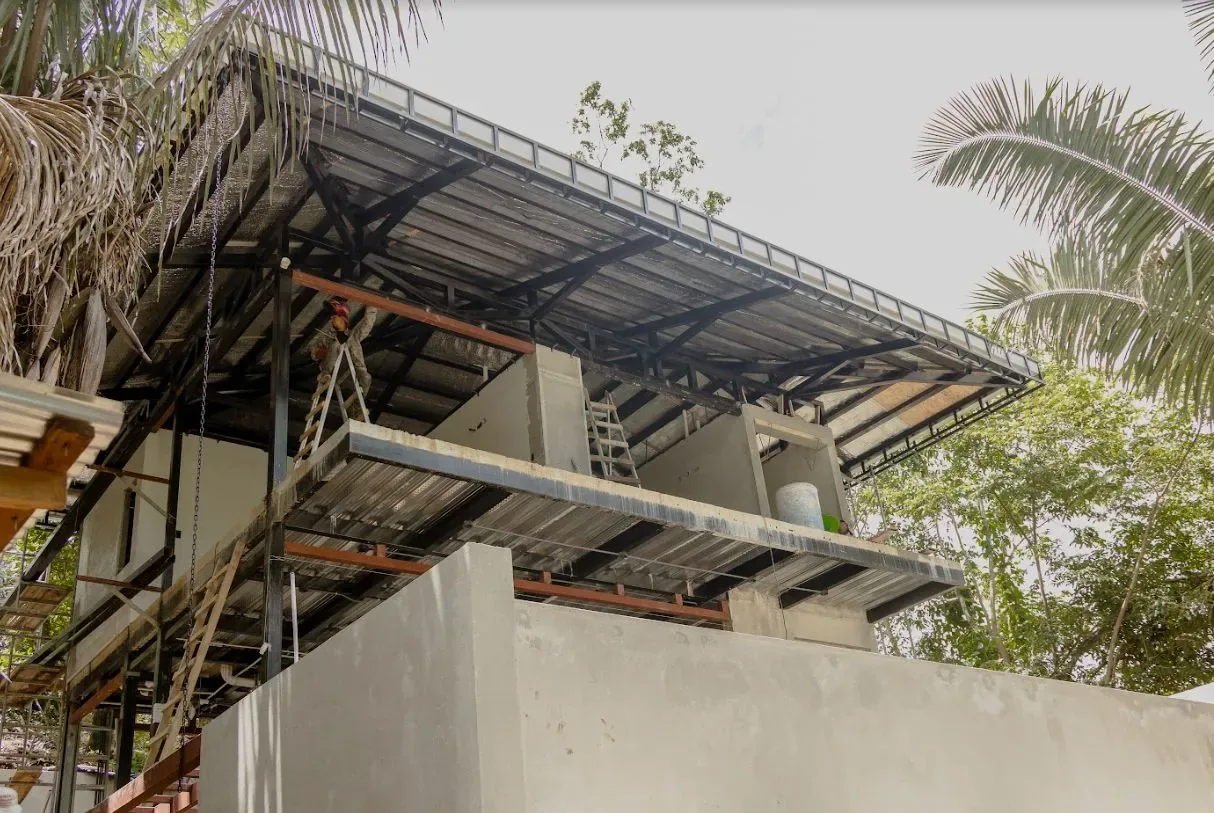
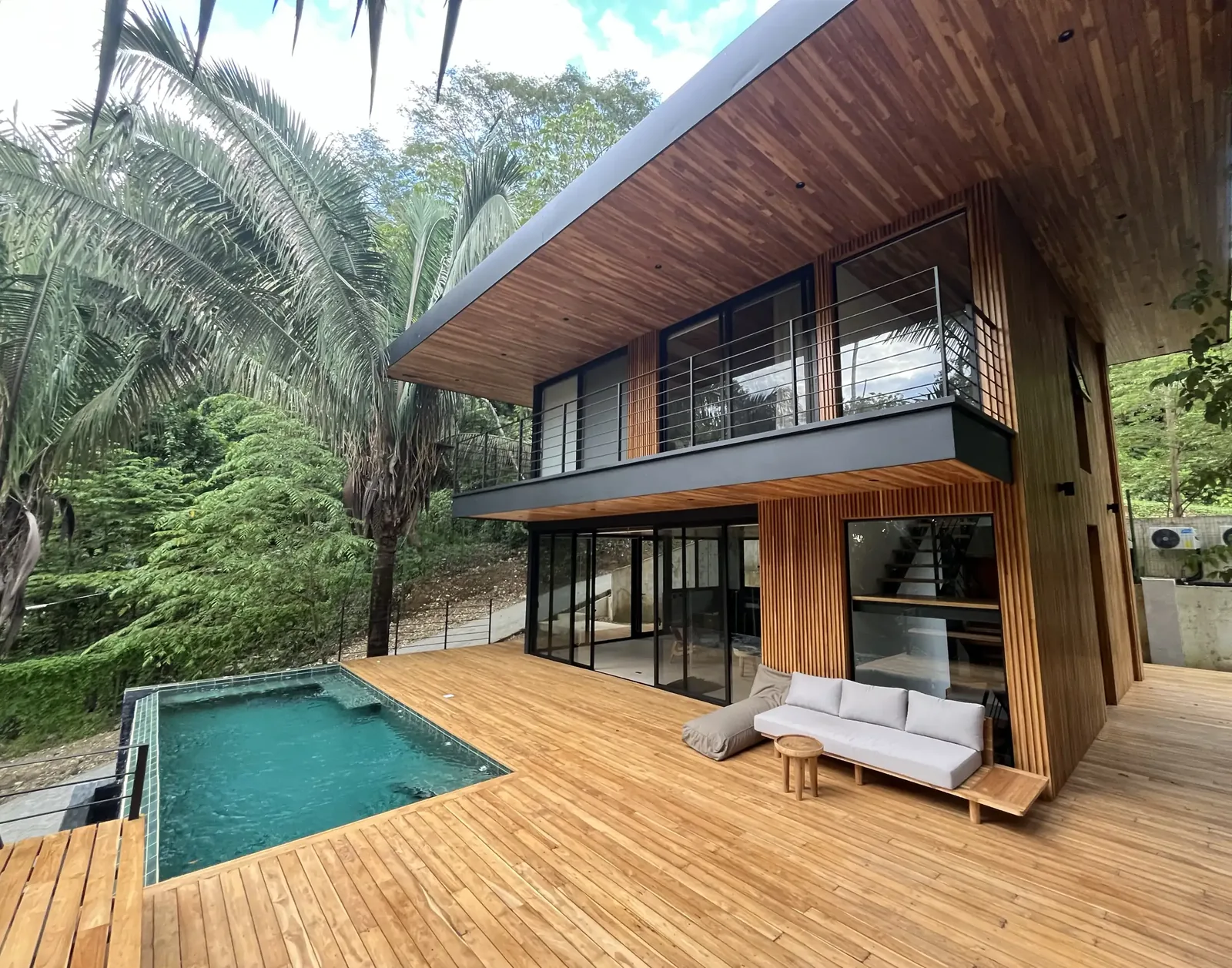
At Yoko North, seven homes went up. Four were finished: two villas built to the same design, Casa Pochote, and one more home finished recently. The first was built as the model home, paid for by a group of members through a joint venture. I was a co-owner of the model home, but I gave my shares to former Yoko employees. The other three were started and stopped halfway when the money to finish them ran out. Owners are still building there today.
During construction
Finished
Bridge and roads
Before the bridge and the road, there was no access to Yoko North. You had to hike in. With a neighbour who knew local development, we built a bridge and an access road. Building a bridge is no small task, and we hired engineers to build it. Nearby families who had to cross the river to get home finally had a way across.
The road is a public road, approved by the Concejo Municipal (the municipal council) and registered by the municipality. We built it where we were told to. A neighbour disputed it only after it was built, and the new municipal government now says the road was never approved.
At Yoko South it was the same. There was no access to even get onto the land, and similar work was done to create access.
Natural building
We built with what the land gave us. Casa Pochote was built between the trees, with one tree inside the house. All the walls were made from local soil, wood and straw, using the traditional bahareque method.
Restoration
Instead of a big retaining wall, we planted many kinds of plants on a very steep slope of about 2,500 square metres at Sangha. They're still there, and the slope has held to this day. A huge wall would have hurt the look of the land, and we cared about that.
Watch the restoration video. There's a series of three showing how we did it.
It was meant to be the community centre for Yoko North, but sadly we couldn't make that dream come true.
Community
We did weekly beach cleanups, helped the Rio Negro School install hot showers, supported a wildlife sanctuary, and donated a car to a local woman starting a cooking business.
Yoko Connect brought the community together to talk openly about the vision and its problems.